| Vector and Hubject Simplify VDV 261 Preconditioning for Electric Bus Fleets |
 |
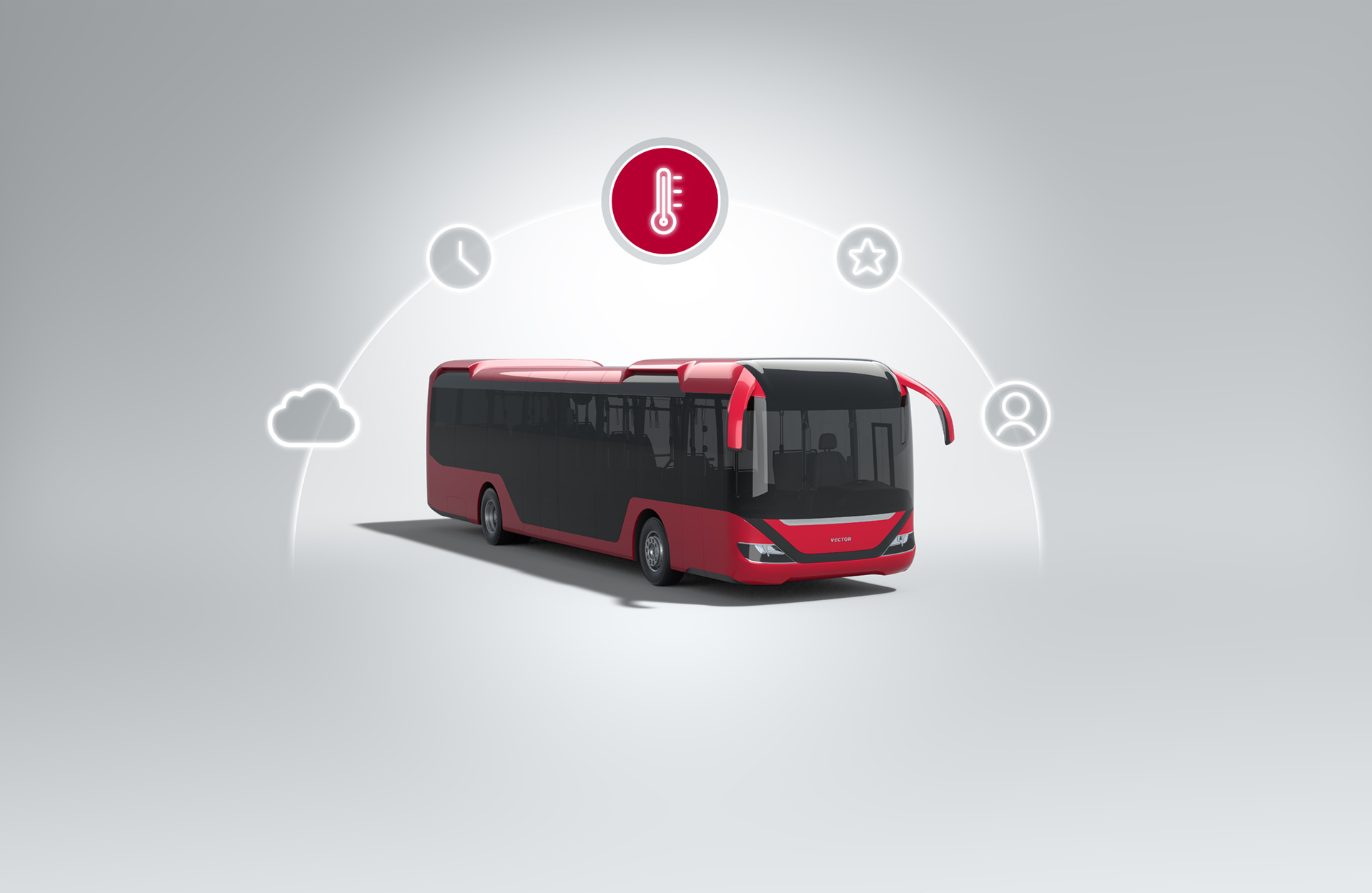
| Stuttgart, Germany, 2026-03-02 – Vector Informatik is expanding its charging and energy management system vCharM with key capabilities for VDV 261-compliant preconditioning of electric bus fleets. In collaboration with Hubject, Vector now enablesautomated certificate management via a public key infrastructure (PKI). In addition, the vCharM.edge hardware supports VDV 261-compliant communication even within existing IPv4 networks. Together, these innovations significantly reduce the effort and error rate when introducing preconditioning in electric bus operations. VDV 261 preconditioning uses energy from the charging station to preheat or precool various vehicle components before service begins. As a result, electric buses start service fully charged, with maximum usable energy available at departure, since no additional energy is required for heating while driving. Automated Certificate Management for VDV 261 VDV 261 requires secure TLS connections between the vehicle, the charging station and the backend system. All participating systems must therefore hold certificates created by the same certification authority. Until now, these certificates have had to be generated and distributed manually, resulting in significant administrative effort. To address this challenge, Vector has partnered with Hubject, one of the world’s leading PKI operators. vCharM is the first charging and energy management system of its kind to support the automated generation of the required certificates via a public PKI, as well as their automatic installation on charging stations and backend systems. As many vehicle manufacturers already pre-install Hubject’s root certificate, manual effort and error rate are significantly reduced. This enables much faster deployment of VDV 261 functionality, especially for large bus fleets and complex depot structures. VDV 261 Communication in Existing IPv4 Infrastructures Beyond security requirements, VDV 261 stipulates that communication between the vehicle, charging station and backend must be IPv6-based. In practice, however, many existing company networks and mobile communication infrastructures still use IPv4. With vCharM.edge, Vector overcomes this limitation. The hardware integrates an IPv6-to-IPv4 proxy, allowing VDV 261-compliant communication without requiring transport operators to modify their existing network infrastructure. Existing IPv4 environments can continue to be used, while the implementation effort is significantly reduced. More Usable Energy at Departure By combining automated certificate management with IPv4 integration, Vector and Hubject substantially simplify the implementation of VDV 261. Public transport operators benefit from a straightforward, reliable and cost-efficient approach to preconditioning electric buses. A key operational advantage is increased energy availability at departure. Vehicles start their routes fully preconditioned, drawing the required energy directly from the charging station. This improves vehicle range, operational planning reliability and day-to-day operational stability. These new features are now fully integrated into Vector's vCharM charging and energy management system, and are available to both new and existing customers. “We are removing two of the biggest practical barriers to implementing VDV 261: complex certificate management and the requirement for IPv6 in typical IPv4 infrastructures,” says Christian Witt, Product Manager at Vector. “This allows transport operators to deploy significantly faster and to precondition vehicles efficiently with maximum available energy at departure.” Hubject adds: “By extending the Hubject V2G-PKI to include the VDV 261 use case, we enable transport operators and system providers to implement VDV 261 for their electric fleets in a simpler, more secure and cost-efficient way. Leveraging the established, scalable V2G-PKI infrastructure creates synergies, avoids parallel certificate landscapes and reduces implementation effort and operating costs sustainably. As a neutral V2G-PKI operator, Hubject is supporting the rapid, interoperable market introduction of VDV 261.” About Hubject Hubject GmbH is a leading global provider of interoperable charging solutions for electric mobility. Its open platform enables secure, standardized communication between vehicles and charging infrastructure, supporting the international expansion of sustainable mobility. More information at: www.vector.com/vcharm About Hubject: Hubject simplifies electric vehicle charging. Through its eRoaming platform intercharge, the eMobility specialist connects charge point operators and eMobility service providers to enable standardized access to charging infrastructure. Hubject operates the world’s largest cross-provider charging network, connecting more than 1,000,000 charge points and more than 3,000 B2B partners in over 70 countries. The company is also a leader in Plug&Charge technology, with 4,500,000 Plug&Charge-enabled electric vehicles, leveraging ISO 15118-2 and ISO 15118-20 standards to ensure a secure and seamless charging experience. Hubject is also the first company in the EV sector to offer financial services to EV companies based on its own payment license. |
|
| About Vector Vector is a leading solution provider and a trusted partner in the development of software-defined systems. For over 35 years, Vector has empowered OEMs and suppliers worldwide to realize complex electronic products that meet the highest standards of functionality, safety, and efficiency—primarily in the automotive industry, and increasingly in medical technology, IoT, rail, and aerospace. At the core of Vector’s portfolio is a comprehensive software ecosystem that seamlessly integrates tools, embedded software, cloud services, and engineering expertise into a high-performance development environment. Driven by technological excellence and close collaboration with customers and partners, Vector delivers tailored solutions that simplify complexity, accelerate development, and enable forward-looking innovation. As an independent company, Vector employs more than 4,500 people across 32 locations worldwide and generated revenues of more than 1 billion euro in 2024. Headquartered in Stuttgart, Germany, Vector maintains a global presence with subsidiaries in Austria, Brazil, China, France, the United Kingdom, India, Italy, Japan, South Korea, Romania, Sweden, Spain, and the United States. |

| Press Releases online: | 4833 |

 |
Press Releases | | | Newsletter | | | Search | | | Agency | | | German |